A mirror shows you what you look like. A painting shows you what you decided to keep. When I watched myself turn into one, the strangest part wasn’t the likeness. It was how fast the face stopped being a reflection and started being a choice.
A piece about what a likeness keeps should be honest about its own making: AI is in the workshop here, as it is on everything I make. The whole process is in Who Do You Think Wrote This?.
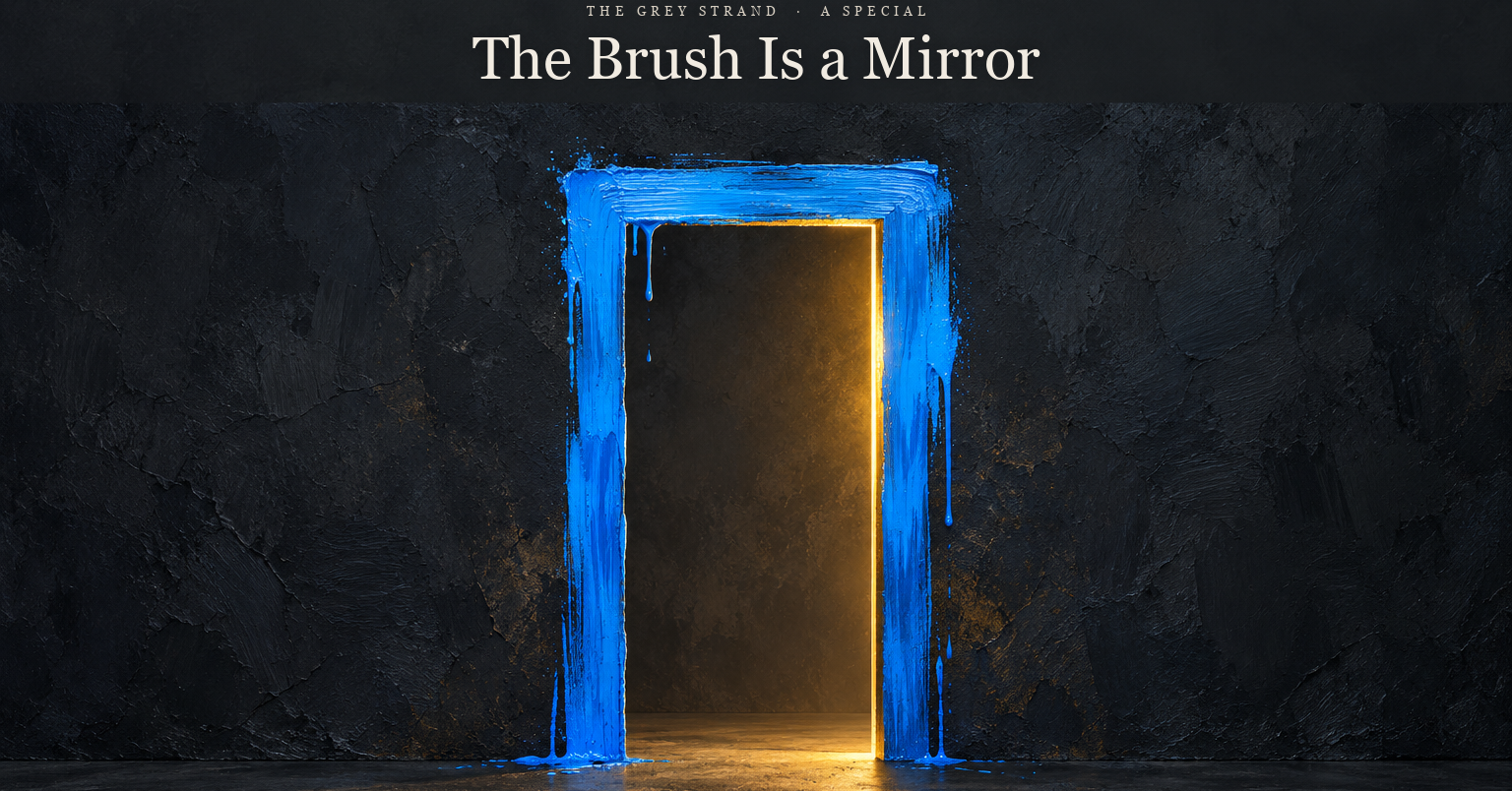
Some old traditions held that a portrait carried a little of the person inside it [1], that a likeness was a doorway as much as a picture. I can’t prove any of that, and I’m not going to pretend I can. But sit with the idea for a second. If a painted face really held something of you, then expression wouldn’t be decoration. It would be the part of you that gets handed over.
So maybe that’s all expression ever was: the moment you stop being only what you are and become something you meant. The brush doesn’t copy you. It asks which version of you you’d like to leave on the wall. What would you hand over, if the painting could keep it?
If you want the next one when it lands, it shows up by email. A free subscription counts, and it helps more than it looks.
I’m in a hard stretch right now: old debt has turned into a lawsuit, and I’m about to fight it. If this one gave you something, even a few dollars sent to the Kitchen helps me keep making this while I do. Thank you for reading either way.
Know somebody who’d argue with this one? Send it their way.
The rest of what I make, finished and otherwise, lives at The Grey Strand.
More thoughts at The Grey Strand
Sources
- Ancient Egyptian conception of the soul (Wikipedia). On the ancient Egyptian belief that a statue carrying a person’s name became a second body for them; the article cites Taylor, J. H. (2001), Death and the Afterlife in Ancient Egypt, University of Chicago Press. https://en.wikipedia.org/wiki/Ancient_Egyptian_conception_of_the_soul